
Schedule your visit today and take a comfortable step forward.
Minimally Invasive Plantar Fasciotomy
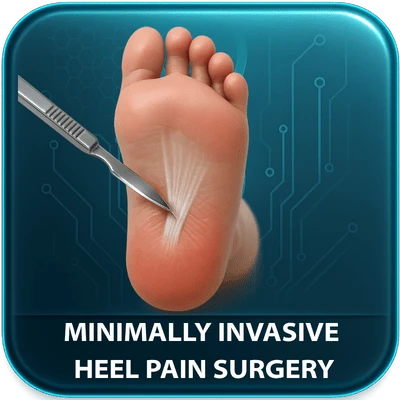
Chronic heel pain got you at your wits’ end? If you’ve battled plantar fasciitis for ages and nothing has fully cured it, there is another option: a plantar fasciotomy, which surgically releases the tight plantar fascia. Our clinic offers a Minimally Invasive Plantar Fasciotomy—tiny incisions, minimal downtime, and a 95%+ success rate—to finally free you from persistent heel pain and get you back to active living. In this minimally invasive plantar fascia release, we treat the source of the problem rather than just masking symptoms.
Because every person uses their feet differently, we take time to understand your work, activities, and goals before recommending minimally invasive plantar fasciitis surgery. For a broader look at how we care for heel pain and plantar fasciitis, you can also explore our comprehensive plantar fasciitis treatment approach at Fallbrook Podiatry.
When Is Plantar Fasciotomy Considered?
Most cases of plantar fasciitis improve with conservative care, such as rest, stretching, physical therapy, orthotics, and targeted injections. According to resources like the Mayo Clinic overview of plantar fasciitis, many people heal gradually with these nonsurgical options.
However, minimally invasive plantar fasciotomy becomes a reasonable option for the stubborn 5–10% with heel pain lasting 6–12+ months despite comprehensive treatment, or when pain severely limits work, sport, and daily life. At that stage, a carefully planned minimally invasive plantar fasciitis surgery can provide durable relief when every other step has been tried.
- Goal: Release a portion of the fascia to reduce tension at the heel and allow durable healing.
- Modern approach: Small side incisions—no large cut on the sole; faster healing and less wound pain.
- Outcomes: Studies show ~95% satisfaction with minimally invasive techniques and fewer complications than open surgery.
Is Minimally Invasive Plantar Fasciotomy Right for You?
In general, you may be a candidate for minimally invasive plantar fasciotomy if imaging and exam confirm plantar fasciitis, you have tried structured non-surgical care, and your pain still limits your ability to stand, walk, or stay active. Together, we review your health history, job demands, and activity goals so the procedure supports the lifestyle you want, not just what your X-rays show.
Minimally Invasive Plantar Fasciotomy: How We Do It
- Pre-op & Anesthesia: Outpatient in our mini-surgical suite. Local ankle block; optional light oral anti-anxiety medication. You remain comfortable and typically go home the same day with clear written and verbal instructions.
- Tiny Incisions: One to three 1–2 mm portals along the inner heel—often one stitch or adhesive strips. These tiny openings are placed off the main weight-bearing areas to support easier walking during recovery.
- Precise Release: We release ~30–50% of the medial plantar fascia band to safeguard nearby nerves—enough to stop the painful tug without compromising arch support.
- Optional Spur Smoothing: If a symptomatic spur is accessible, we can gently contour it through a micro-incision.
- Closure & Protection: Tiny sutures or steri-strips, a small dressing, and typically a walking boot for short-term support.
Why partial (not full) release? It relieves tension while maintaining the structural integrity of your arch.
Because this is a minimally invasive plantar fascia release, soft tissues experience less disruption compared with open surgery. As a result, many people notice that they can put gentle weight on the heel sooner, and they often feel more confident about moving during recovery. However, we still guide you carefully so you do not overdo things while the fascia remodels and strengthens.
Why Minimal Is Maximal (Benefits)
- Tiny incisions off the weight-bearing area → faster healing, less wound pain.
- High success, low complications in experienced hands.
- Quick recovery: Often weight-bearing in a boot right away; supportive shoes within weeks.
- No cast (usually): A boot or sturdy shoe is often sufficient.
- Tiny scars and minimal internal scarring.
For many people with long-standing plantar fasciitis, a minimally invasive plantar fasciotomy feels like finally turning off a fire that has been smoldering in their heel for years. In addition, the combination of small incisions and careful partial release helps protect the overall shape of the arch, which is especially important if you are on your feet all day for work or caregiving.
Trust Your Heels to an Expert
Dr. Patish treats plantar fasciitis from conservative through surgical care and recommends fasciotomy only when truly needed. We prioritize clarity, comfort, and modern minimally invasive technique—so a “minor snip” delivers a major improvement in your quality of life.
Before suggesting a minimally invasive plantar fasciotomy, we review your history, prior treatments, and imaging in detail. Then, we explain every step of the procedure and recovery in plain language, so you can ask questions and make a confident, informed choice. Our team is committed to inclusive, respectful care for people of all ages and backgrounds, and we welcome you to learn more about Fallbrook Podiatry Inc..
After the Procedure: Healing & Results
0–2 Weeks
- Soreness at incision site; elevate and use meds as directed.
- Keep bandage dry; ankle ROM (point/flex/circles).
- Weight-bearing in boot per plan (often immediate, heel/flat-foot).
~3 Weeks
- Suture removal; transition toward supportive sneaker.
- Begin gentle calf stretches as tolerated.
3–6 Weeks
- Increase activity; often in regular shoe by ~4–6 weeks.
- Start plantar fascia stretches; consider PT for mobility and strength.
2–3 Months
- Most activities resumed; runners ramp gradually at 8–12 weeks.
- Supportive insoles/orthotics may help long-term comfort.
Most patients report a life-changing reduction of “first-step” heel pain with durable relief once healing completes.
Although healing timelines can vary, many people feel that each week after a minimally invasive plantar fasciotomy brings a little more freedom and confidence. During follow-up visits, we check your progress, fine-tune shoe and orthotic recommendations, and answer new questions as you safely return to walking, work, and sport.
Take a Step Toward Relief – Contact Us
If months of treatment haven’t solved your heel pain, it may be time to discuss a minimally invasive plantar fasciotomy. We’ll review your history, examine your foot, and go over success rates, recovery, and all your questions—so you can move forward with confidence.
Most importantly, you are never pressured into surgery. Instead, we partner with you to decide whether minimally invasive plantar fasciitis surgery matches your goals, lifestyle, and comfort level. Together, we build a plan that respects your timeline and supports long-term foot health.